If Your Car Won't Start In Cold, But Your Battery Is Good: Causes & What To Do
It’s freezing out. You scrape the windshield, climb in, turn the key or hit Start and… nothing happens. Maybe you hear clicking, maybe the lights flicker, or maybe it just refuses to turn over.
A lot of drivers assume that if the lights come on, “my battery is good, so why won’t it start?” But cold weather changes everything. A battery that worked fine yesterday can fall short today, and several other systems can fail in extreme temps even when the battery seems healthy.
Feel more confident on cold mornings. Book an inspection with Lancer in St. Paul, MN.
Why Won't My Car Start In The Cold?
Most drivers think, “My battery’s good, so it must be something else.” But freezing temperatures change how every part of your starting system behaves.
Cold weather can:
- reduce a battery’s power and cold-cranking amps
- thicken engine oil, making the engine harder to turn
- slow down electrical signals your car depends on
- introduce moisture into fuel and electrical components
Any one of these can cause slow cranking, clicking, or a car that lights up but won’t actually start. Hybrid and EV drivers may notice the car powering on but refusing to enter READY mode when the 12-volt system is too cold or weak.
So even if you’ve recently replaced your battery or know it isn’t completely dead, it’s normal to wonder what else could be making your car struggle on a frigid morning.
Battery-Related Reasons Your Car Won't Start In Cold
Freezing temperatures change how a battery behaves — even a brand-new one. Because it relies on a chemical reaction to make power, cold weather slows everything down and its output drops quickly in winter.
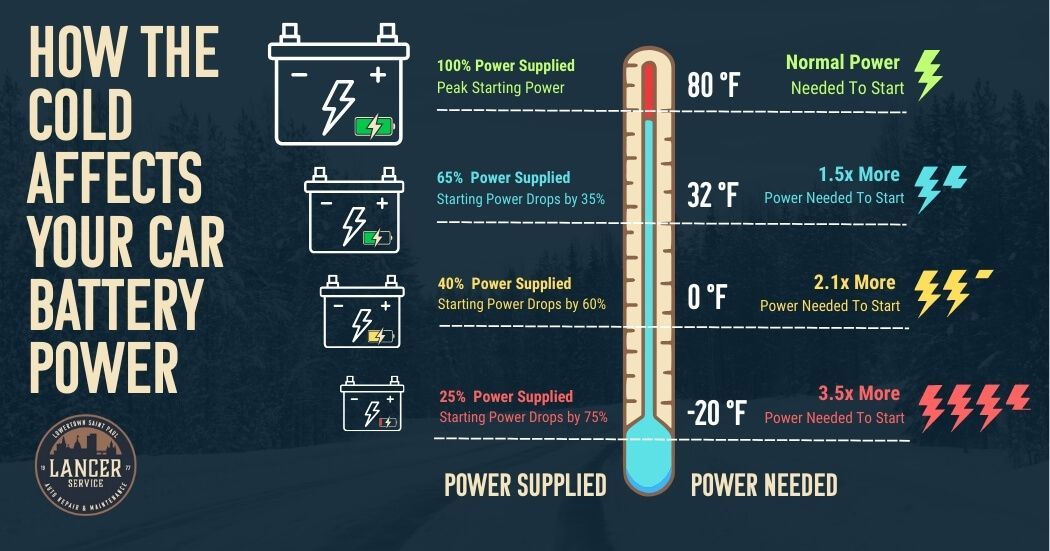
Cold also makes the engine harder to turn because the internal parts stiffen. So if your car won’t start on a freezing morning even though the lights come on, don’t rule out the battery just yet. Here’s what could be going on:
Battery Has Voltage but Not Enough Cold-Cranking Amps (CCA)
Signs: Slow cranking • Dimming lights • Rapid clicking • Cranks once then stops
A battery can show normal voltage but still fail when you try starting your car. Winter weather demands high cold-cranking amps (CCA) — the power needed to turn a cold engine over. If this is the problem, a jump start can often get you back on the road for now, but the issue will usually return until the battery is replaced. It's recommended to have a professional technician load test the battery with a commercial grade load tester.
Corroded or Loose Battery Terminals
Signs: Flickering lights • Intermittent power • Silence when you turn the key
Cold temperatures can stiffen battery cables and worsen loose connections or corrosion. Even a small amount of corrosion can interrupt the flow of power needed to start the engine. You may be able to visually spot corrosion (a white, bluish, pink, or red buildup), but don’t try to scrape it because cold metal becomes brittle. If you’re not comfortable opening the hood, or you see noticeable buildup, schedule a battery cleaning service to have a technician look at it.
Other Reasons Your Car Won't Start In The Cold
If the battery’s starting power is strong and the terminals are clean and tight, then the no-start is likely coming from somewhere else in the starting, charging, or fuel system. Cold weather stresses every component, not just the battery. Here are the other common causes we see in the shop:
Weak or Failing Starter Motor
Signs: A single click • Slow, heavy cranking
A weak starter motor is a really common reason a car won’t start on cold mornings. If your engine starts fine when it’s warmer but suddenly struggles, cranks slowly, or only gives a single click when it’s freezing out, these are classic signs that the starter has become weak and is pulling too much power out of the battery. Cold weather doesn’t break a starter, but it definitely exposes one that’s already wearing out. Learn more about how a failing starter motor impacts vehicle performance.
Most hybrids don’t use a traditional starter motor at all; they use the electric drive motor to start the engine. And fully electric vehicles don’t use starters anywhere in the system. So if a hybrid or EV won’t “wake up,” it’s almost never a starter problem. It’s usually the 12-volt battery or the charging system that needs attention.
Fuel Delivery Problems in Freezing Temperatures
Signs: Cranks but won’t start in the cold • Sputtering • Starts then stalls out immediately • Only trouble on extremely cold mornings
Cold weather can stress your fuel system — especially if there are underlying issues. While true fuel-line freeze is extremely rare in modern vehicles, problems like a weak fuel pump, a clogged filter, or contaminated fuel can show up more noticeably in very cold weather.
If the engine cranks but never catches, or starts and immediately stalls, it may be struggling to get the right amount of fuel. We see this more often after a recent fill-up with “bad gas” or when a fuel pump is already on its way out. The cold just makes the symptoms show up more clearly.
Charging System or Alternator Issues
Signs: Dim or flickering headlights • Battery warning light comes on the dash • Car dies shortly after you jump it • Electrical accessories that behave unpredictably
If you’ve put in a new battery but it still goes flat—or the car dies again soon after a jump—the issue may be the charging system, not the battery. In gas vehicles, the alternator recharges the battery as you drive. If it’s weak, the battery never recovers, and cold weather exposes that fast. A failing alternator won’t recover on its own, and the car can shut off again mid-drive. A quick charging-system test will confirm whether the alternator, or wiring is to blame.
Hybrids and EVs don’t use a traditional alternator. Instead, a DC–DC converter handles 12-volt charging. When that system struggles, the symptoms look similar—flickering accessories, warning lights, or the vehicle refusing to “wake up.” A diagnostic test pinpoints which part of the charging system needs attention.
Sensors Struggling in Extreme Cold (Crankshaft, Coolant, MAF)
Signs: Long crank before it gives up • Engine turns over but never starts • Random warning lights that stay on after starting attempts
Modern vehicles rely on sensors to calculate fuel mixture, timing, and air flow. In extreme cold, those sensors can send slow or inaccurate data, which means the engine may crank but never quite fire. For hybrids and EVs, if the system doesn’t receive accurate data, it may refuse to enter “Ready” mode. Your auto repair team can quickly identify if this is the cause with thorough auto diagnostic testing.
What To Do If Your Car Won't Start In The Cold
If your car or truck won’t start in the cold, it’s important to avoid DIY fixes you might see online. No hairdryers, hot water, open flames, or tapping random engine components. Whether you’re trying to get to work or heading out to bring the kids to school on a cold morning, here are the steps you can try.
How To Get Your Car To Start In The Cold
1. Try starting the vehicle.
- If possible, make sure heavy electrical features (blower fan, heated seats, rear defrost) are off before you attempt to start the car.
- Turn the key or press Start one time.
- Don’t keep cranking. That can flood the engine or drain the battery.
2. Listen and look for clues.
- One loud click = Starter motor or weak connection
- Rapid clicking = Low battery, low CCA, or poor battery connection
- Slow, heavy cranking = Battery struggling or weak starter
- Cranks once, then stops = Battery has voltage but not enough power
- Cranks normally but won’t start = Fuel delivery issue or sensors failing in the cold
- Silence = Electrical/terminal issue or completely dead 12-volt battery
- Check your dashboard for messages like “battery too cold,” “12V low,” or “Not Ready”
3. Try a safe jump-start.
If you have jumper cables and a second vehicle available, a jump-start can often get a low or cold battery going again. Always follow the jump-start procedure in your owner’s manual. Once your car starts, let it run for about 30–60 seconds so the oil can circulate, then drive gently until everything reaches normal operating temperature.
Hot tip: If your car mostly sees short trips (school drop-offs, quick errands, around-town driving) your battery may not get enough time to recharge between starts. A trickle charger helps keep it topped up, so cold mornings are less of a battle. We carry them at Lancer and can help you pick the right one for your vehicle.
4. If your vehicle still won’t start, it’s time for a diagnostic.
If the jump doesn’t help or the car dies again shortly after starting, the issue is deeper than the battery. Don’t force it. It’s time for diagnostics. Book an appointment with your auto repair shop.
Hot tip: If you’re stuck somewhere, check your insurance app or card – many people have roadside assistance or AAA and don’t even realize it. You can have the tow truck bring your vehicle straight to Lancer Service in St. Paul (270 E 8th St). Be prepared for next time, save our number in your phone: (651) 224-0267.
How to Prevent Cold-Start Problems in the Future
Preventing winter starting issues is much easier than dealing with them in the moment.
- Keep your fuel tank at least half full to prevent moisture buildup.
- Replace an aging battery before winter. Don’t wait for a zero-degree morning.
- Schedule seasonal maintenance before the coldest months.
- Park in a garage if possible, or use a trickle charger if you have one.
- Avoid frequent short winter trips that don’t allow your system to recharge adequately.
- Turn off heavy electrical loads (blower fan, heated seats, rear defrost) before you shut the car off, and make sure they’re off when you start it again on a cold morning.
Pay attention to early warning signs like slow cranking, dim lights, or occasional no-starts and get your vehicle inspected before it becomes a bigger problem. Lancer’s technicians will check the condition of your battery as part of our routine oil service inspections.
When to Call Lancer For Cold Weather Car Problems
If you’re not sure whether it’s the battery, the starter, the oil, the sensors, or the electrical system, you shouldn’t have to guess. And you definitely shouldn’t have to stand outside in the cold trying to diagnose it. We can find the real cause and help you get back on the road confidently, whether you drive gas, hybrid, or electric.
Call today to book a diagnostic appointment with Lancer Service in St. Paul.
With Lancer, you’ll get:
- A detailed digital vehicle inspection
- Clear explanations in plain English
- Photos and videos so you see exactly what we see
- Prioritized repair options (what’s urgent and what can wait)
- Loaner cars or rideshare options so your day isn’t interrupted
We’ve proudly helped Minnesotans get through every winter since 1977. (Yup, even that one.)
FAQs
Why does my car click but not start in cold weather?
Rapid clicking usually means the battery doesn’t have enough power to crank the engine, even if accessories still work. A single click points more toward a starter or connection issue. Both problems get worse when temperatures drop. In hybrids, you may hear relays clicking instead.
Can cold weather drain a car battery even if it’s “new”?
Yes. Cold weather reduces a battery’s ability to hold and deliver power. A newer battery can still struggle in freezing temperatures, especially if it wasn’t fully charged or isn’t the right CCA rating for winter conditions. And yes, this includes hybrid and EV 12-volt batteries, which work hard to power computers and HVAC systems before the vehicle even moves.
Should you start your car when it’s very cold?
It’s generally safe to start and drive your car in very cold weather. Modern engines are designed to handle extreme temperatures, including Minnesota winters. You’re not harming the engine by starting it on a subzero morning.
How cold is too cold to start a car?
Below 0°F, many vehicles begin to struggle — and around –20°F to –30°F, even healthy batteries lose significant power. Garage parking, routine inspections during oil services (or seasonal inspections when offered), and a strong battery make a big difference.
Related Posts