What Is a Trickle Charger? When Should You Use One?

Angie Wishard • February 13, 2026
If you’ve ever gone to start a car that mostly sits in the driveway (or often makes short trips in cold weather) only to find the battery dead, you’re not alone. We see this all the time. Trickle charging can help prevent that kind of surprise, but it isn’t necessary for every vehicle. 

Below, we’ll walk through how a trickle charger works, who it helps most, and when it’s not the right solution.

At Lancer Service in St. Paul, we carry trickle chargers. If your battery keeps dying or your car won’t start in the cold and you’re not sure why, our electrical diagnostics can pinpoint the cause.

What is a trickle charger, exactly?

A trickle battery charger is designed to deliver a slow, steady charge that keeps a car battery topped off over time. Instead of charging a battery quickly and then stopping, a trickle charger delivers a very small amount of power continuously to replace what’s naturally lost when a car sits. 

The goal isn’t speed, it’s maintenance. Think of it as proactively keeping a battery healthy between drives, not bringing a completely dead one back to life. 

Understanding the idea behind trickle charging helps, but it’s just as important to know how it actually works inside your car.
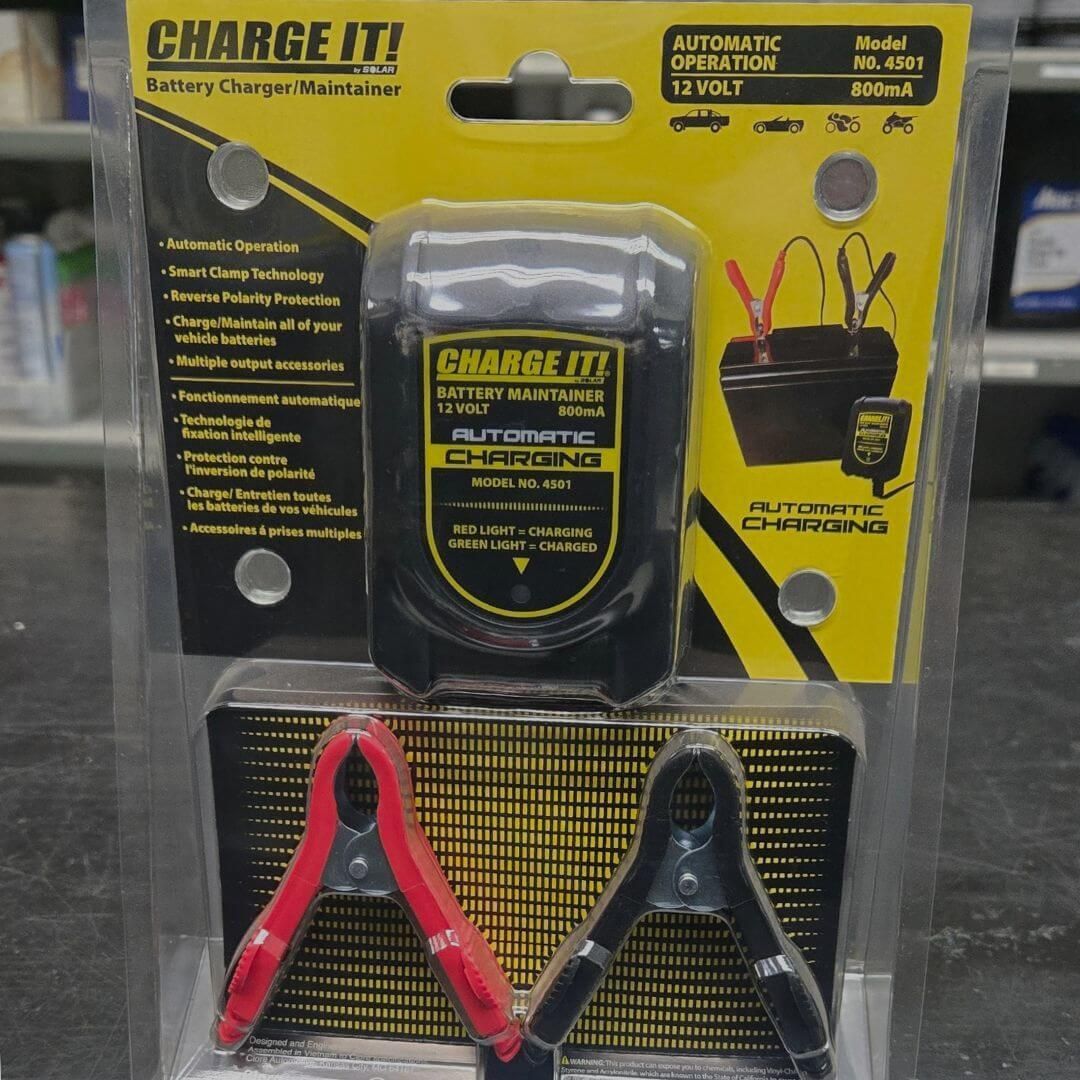
Image of a trickle charger in packaging

How does a trickle charger work?

Charging a battery with a trickle charger is intentionally slow and steady. Once connected, here’s what that charging process looks like in simple terms:
 
  • You connect the charger directly to the vehicle’s lead acid battery.
  • A small, continuous amount of power flows into the battery.
  • That power replaces energy lost to normal drain while the car isn’t being driven.
  • The battery maintains a dependable charge level instead of slowly dropping.
This matters because modern vehicles continue to draw power even when they’re turned off. Cars built in recent years have things like onboard computers, security features, and keyless entry that create a small but constant drain. 

We often see this during inspections on cars that aren’t driven regularly. Short trips can add to the problem, since they don’t always give the battery enough time to fully recharge. 

In the right situations, a trickle charger helps balance that slow drain by keeping the battery topped off between drives while preventing overcharging. It’s not designed to revive a failing battery or provide a quick boost, but it can be an effective way to prevent healthy batteries from running down when a car spends more time parked than driving.

when to use a trickle charger

A trickle charger for a car battery is most useful in situations where a vehicle is mechanically fine, but simply isn’t driven often enough to keep the battery fully charged. 

This often comes into play in everyday situations like:
  • Cars that sit for days at a time. If a vehicle goes several days without being driven, small amounts of power loss can add up between uses.
  • Second or backup vehicles. In busy households or multiple-vehicle families, one car naturally gets used less, even if it’s in good condition.
  • Seasonal or infrequently driven cars. Vehicles that are only driven occasionally can lose charge quietly between drives, especially between longer periods of sitting.
In these situations, trickle charging a car battery helps sustain a steady charge between drives. It’s a preventative approach that can reduce the chance of unexpected battery issues, without changing how the vehicle is used day to day.

When a trickle charger is not the right solution

A trickle charger can be useful in certain situations, but it’s not a cure-all. It’s important to be clear about when it won’t actually help. 

A trickle charger is not the right option if:
  • The battery is failing or sulfated. Once a battery can no longer hold a charge, adding power slowly won’t restore it. This is something we see during testing more often than people expect, even with batteries that aren’t very old.
  • The car needs frequent jump-starts. Repeated jump-starts usually point to a deeper issue, whether that’s a weakened battery or something drawing power when the car is off.
  • There’s an underlying electrical drain. If a battery is losing energy faster than normal, a trickle charger won’t correct the cause. That drain needs to be isolated before any maintenance solution makes sense.
In cases like these, using a trickle charger isn’t the answer. It will just delay finding the real fix. That’s why we always recommend understanding what’s actually happening first, so the solution fits the problem, not the other way around.

With that in mind, let’s look at how a trickle charger compares to other battery charging options.

battery charging options: What's what

When comparing a trickle charger vs. battery charger, the biggest difference lies in their basic function. Each serves a different purpose, and understanding that makes it easier to choose the right approach.

Here’s a simple way to think about it:
  • Battery chargers: Designed to restore power when a battery has already lost a significant charge. These are typically used after a battery is drained and needs to be brought back up.
  • Trickle chargers: Designed to maintain a healthy battery over time by delivering a slow, steady charge. They’re most useful when a vehicle isn’t driven often and the goal is prevention, not recovery.
The key difference comes down to intent. Battery chargers focus on fixing a low charge quickly, while trickle chargers focus on keeping a good battery from running down. 

battery maintainer vs trickle charger

The terms battery maintainer and trickle charger are often used interchangeably, which is where some confusion comes from. Both solutions are designed to support batteries over time rather than charge them quickly. While they often serve a similar purpose in everyday use, there are distinct technical differences in power delivery.
  • Trickle chargers deliver a constant low-level charge to the battery.
  • Battery maintainers (or float chargers) automatically adjust to provide power only when the battery needs it. 
Because of this, many products now labeled as “trickle chargers” function more like maintainers. The important thing to know is that you’re not missing a separate solution. Both are intended to maintain functional batteries, not repair failing ones. Either can be effective when used in the right situation.
Quick questions often come up as folks try to understand their battery issues. These FAQs cover what we’re asked most often and help clarify what to expect before deciding what makes sense.

Unsure if you need a trickle charger for your car battery?

Trickle chargers can be helpful in the right situations, but they aren’t necessary for every vehicle. What matters most is starting with a healthy battery and understanding how your car is actually being used. We help drivers sort this out every day. Whether that means maintenance, a simple adjustment, or confirming that nothing extra is needed at all.


At Lancer Service in St. Paul, MN, we carry trickle chargers and can help you choose the right one for your vehicle. If you have questions or aren’t sure what’s best for your car, we’re always happy to take a look and walk you through your options.


Unsure about your car battery’s condition? Call us for a diagnostic appointment . We’ll happily check your battery and help you prevent surprises. No pressure, just clarity.


trickle charger faqs

  • Will a trickle charger charge a dead battery?

    Sometimes, but only if the battery is still in good condition. 


    A trickle charger can slowly recharge a battery that's slightly discharged, but it won't fix a battery that's failing or can no longer hold a charge. In those cases, charging may appear to work temporarily, but the underlying problem remains. 

  • How long does a trickle charger take to charge a battery?

    It can take anywhere from several hours to a full day or more. 


    Because a trickle charger delivers power slowly, charging time depends on how low the battery is and its overall condition. Trickle chargers are designed for battery maintenenace, not fast recharging. 

  • Are trickle chargers safe for your car battery?

    Yes, they are safe when used properly. 


    Most modern trickle chargers and battery maintainers are safe for car batteries, as long as you're using the right charger for your battery type (standard lead-acid vs AGM, for example) and following the manufacturer instructions. A trickle charger cna help keep a healthy batteyr topped off, but it won't repair a battery that's already failing internally.

  • Can a trickle charger ruin a battery?

    Not if used correctly.


    But using the wrong charger, the wrong battery setting (especially for AGM batteries), or leaving a non-automatic trickle charger connected too long can overcharge and damage a battery. And if the battery is already worn out, charging it won't restore its ability to hold power. Have your battery checked at routine inspections

Related Posts

Image of a women dressed in winter clothes sitting in her car, it's snowy outside
By Angie Wishard January 6, 2026
Why is my heat not working in my car? Common vehicle heater issues, typical causes of car heaters blowing cold air, warm air, or none at all, and when to get help.
Sedan car in a neighborhood driveway, covered in snow in extreme cold
By Angie Wishard December 18, 2025
If your car won’t start in the cold but the battery seems fine, one of these 5 problems is usually to blame. Learn the causes and the safest next steps.
Flashing tire pressure light on driver's dashboard
By Angie Wishard November 12, 2025
If your tire pressure light is flashing or solid, don’t panic. Here’s what it means, what to do, when it’s safe to drive, and how to fix TPMS issues fast.