How to Tell If a Pothole Damaged Your Car (7 Sign Quick Check)
It’s springtime, and you just hit a pothole after a whole season of dodging them. Maybe it was bad enough to make you wince. Now something feels slightly off — or you're just not sure.
As your nerves settle down and your knuckles regain their color, here's a quick checklist to run through to tell if a pothole has damaged your car, and a deeper breakdown of each symptom (and how serious it is) below.
Quick Check after hitting a pothole
Not sure how to tell if a pothole damaged your car? The good news is you can do a quick check in just a few minutes without any tools needed. Run through this before you do anything else:
- Tires: Any bulges, cracks, or visible sidewall damage? Is pressure dropping?
- Dashboard: Any warning lights on? (TPMS, ABS, traction control)
- Steering: Does the car pull to one side? Is the wheel off-center?
- Feel: New vibrations, especially at highway speeds?
- Sound: Clunking, thumping, or scraping underneath?
- Ride : Bouncier or rougher than it was before?
If you answered yes to any of these, keep reading. We'll walk through what each one likely means and how urgent it is. If everything seems normal, you're probably fine for now, but stay alert over the next few days. Some pothole damage doesn't show up right away.
And if you want a deeper look for peace of mind, Lancer’s auto repair technicians in St. Paul can take a closer look with a thorough automotive diagnostic inspection so you can decide what to do next.
what happens when you hit a pothole
7 common signs of pothole damage
Your car will usually give you clues of any serious pothole damage right after impact and in the days that follow. Here are the most common signs of pothole damage to look for:
1. Dashboard Warning Lights
2. Tire or Wheel Damage
3. Pulling to One Side
4. Vibrations or Shaking
5. Suspension Damage
6. Unusual Noises
7. Fluid Leaks
1. Dashboard warning lights
A warning light after a pothole isn't bad luck, it's information. After a hard hit, watch for a
TPMS light (tire pressure monitoring), often the first indicator of a damaged or deflating tire.
ABS or traction/stability control lights can also trigger if a wheel speed sensor was damaged on impact.
- Get it checked ASAP: ABS or stability control light
- Get it checked soon: TPMS light comes on
If any of these come on after hitting a pothole, don't ignore them. They're your car telling you something changed.
2. tire or wheel damage
Tires take the first hit — and often the hardest. Once you've stopped safely, do a quick visual: look for cracks or cuts in the sidewall, bulges or bubbles, or signs of pressure loss. Bulges are a big deal — they mean the internal structure has been compromised, and that's a blowout waiting to happen.
A hard impact can also bend or crack a wheel even when the tire looks completely fine. Signs of wheel damage include visible dents or cracks on the rim, persistent vibration, or a slow air leak with no visible tire damage. Because tires and wheels take the hit together, it's worth checking both at the same time.
- Get it checked ASAP : visible rim damage or persistent vibration
- Monitor closely: slow pressure loss with no visible damage
- Not safe to drive: visible bulge, rapidly losing air, or flat tire
flat tire right now
If you're dealing with a flat immediately after impact, don't drive on it. Use your spare if you have one, or call for roadside assistance. Even a short distance on a flat can destroy the tire, damage the wheel, and turn a straightforward repair into a much more expensive one.
3. pulling to one side
After hitting a pothole, your steering might feel loose, less responsive, or slightly off-center — or your car may pull to one side on its own. Pulling is often caused by uneven tire pressure or tire damage, so check your tires first. If the tires look fine but the steering wheel is visibly off-center, less responsive, or the car consistently drifts, alignment or a steering component is the more likely cause. And if the impact was enough to shift the alignment, something was almost certainly bent in the process.
- Get it checked ASAP: strong pull, loose or delayed steering, off-center wheel, or uneven tire wear
- Usually safe (short term): slight pull or minor change in steering feel
Even mild pulling can wear your tires down faster and lead to earlier replacement.
4. vibrations or shaking
If you hit a pothole and now your car shakes, especially at highway speeds, it could point to tire damage, wheel imbalance, a slightly bent wheel, or a suspension issue. Vibrations are a reliable sign that something isn’t quite right.
- Get it checked ASAP: strong shaking, worsening over time, or paired with noise
- Usually safe (short term): light vibration at certain speeds
If the vibration increases with speed, it’s best to have it looked at sooner rather than later.
5. suspension damage
This one often gets overlooked because it can develop gradually. Shocks and struts are designed to absorb bumps, but a sudden, forceful hit can push them beyond their limits. Once they're compromised, your ride quality and handling start to slip — sometimes slowly enough that you don't notice until it's gotten significantly worse.
Signs your suspension may have been affected include excessive bouncing after going over a bump, a rough, unstable, or wallowy feeling on the road, or clunking or knocking sounds over uneven roads.
- Get it checked ASAP: excessive bouncing, instability, or reduced control
- Monitor: slightly firmer or different ride feel
6. unusual noises
Hearing weird car noises after a pothole impact can point to suspension or exhaust components that have loosened or shifted out of place. These sounds will often show up when driving over bumps or uneven pavement.
- Get it checked ASAP: consistent clunking, loud thuds, or worsening noise
- Monitor: occasional light noise without other symptoms
Noises are often one of the clearest indicators of underlying issues.
7. fluid leaks
If a pothole was deep enough, your car may have “bottomed out,” meaning the underside made contact with the road. You might notice this as fluid puddles under the car after parking or scraping or dragging sounds while driving.
- Get it checked ASAP: visible fluid leaks or strong scraping sounds
While this is less common, it can be more serious, leading to oil or fluid leaks and damage to the oil pan or undercarriage.
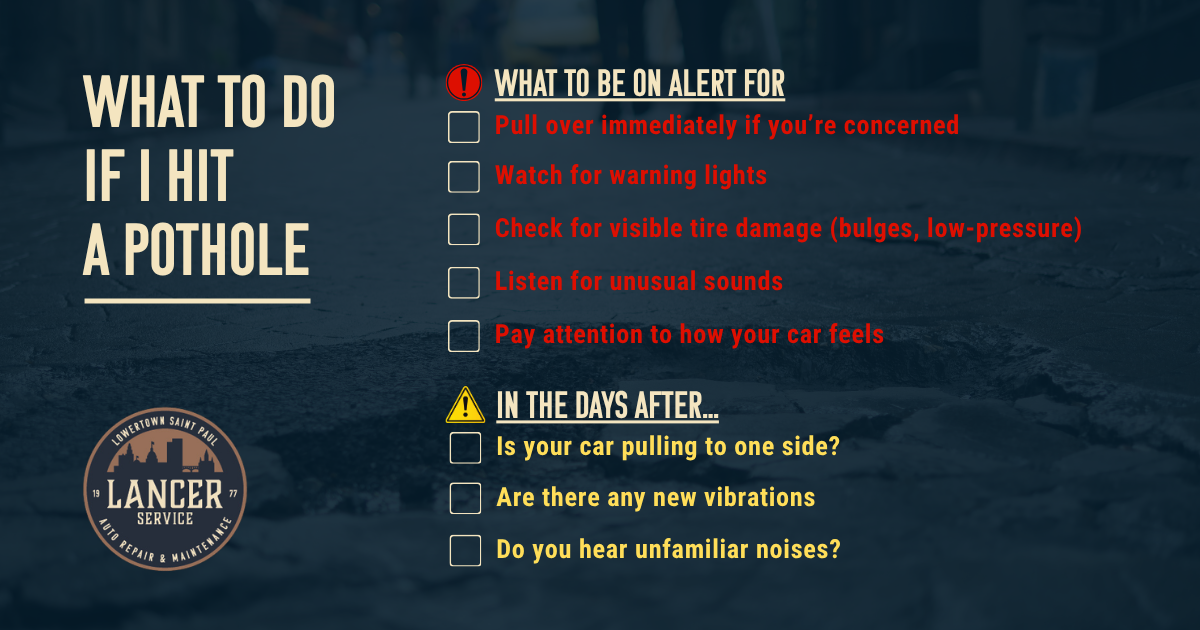
what do i do if i hit a pothole
If you’ve just hit a pothole, a few simple steps can help you catch potential issues early and avoid bigger problems down the road. Right after impact, pay attention to how your car feels and sounds. If anything seems off, it’s a good idea to pull over safely and take a quick look.
- Watch for warning lights
- Pay attention to how your car feels
- Check for visible tire damage (bulges, low-pressure)
- Listen for unusual sounds
If everything seems normal, you’re likely okay to keep driving but stay alert for changes.
in the days after hitting a pothole
Some pothole damage doesn’t show up right away, so it’s important to keep an eye on how your car behaves over the next few days.
- Notice if your car starts pulling to one side
- Pay attention to new vibrations
- Listen for noises that weren’t there before
If you notice any changes, schedule an inspection to catch small issues and help prevent more expensive repairs later on.
the cost of ignoring pothole damage
Not every pothole hit is an emergency. But small issues left alone tend to grow into bigger, more expensive ones. A slight alignment shift quietly chews through your tires. A compromised shock gradually makes your car harder to control. On Minnesota roads, these issues compound quickly if you don't catch them early.
The good news: most pothole damage, when caught early, is straightforward to fix.
worried about pothole damage? we'll check it out
If your car doesn't feel quite right, it's worth getting it looked at — just to be sure.
At Lancer Service Auto Repair in St. Paul, our technicians do a thorough automotive diagnostic inspection with photos and a plain-language breakdown of what's going on, so you can decide what to do next without any pressure.
We'll tell you what's urgent, what can wait, and what's nothing to worry about.
Same-day inspections are often available. Book your inspection in just a few clicks .
Pothole damage faqs
Here are quick answers to a few common questions drivers have after hitting a pothole.
Can a Pothole Damage Shocks or Struts?
Yes — especially on a hard or high-speed impact. Shocks and struts are built to absorb bumps, but a sudden forceful hit can push them beyond their limits. Watch for excessive bouncing, a rough or unstable ride, or clunking over uneven roads.
If you notice any of these after a pothole impact, it’s worth scheduling a suspension check to catch potential issues early before they lead to more extensive repairs.
Can Hitting a Pothole Mess Up Alignment?
Yes, hitting a pothole can change how components sit and throw your alignment off. The most common signs are your car pulling to one side, off-center steering wheel, or uneven tire wear over time. Read more about this in our deeper breakdown on how alignment actually works and when it’s needed.
Is It Safe to Drive After Hitting a Pothole?
It depends. If your car drives normally, it’s usually okay short-term. But if you notice pulling, vibrations, new noises, or any tire damage, get it checked as soon as you can. When in doubt, it's not worth the risk.
Especially when inspections from Lancer are free and no-pressure.
What Warning Lights Should I Watch for After a Pothole?
The most common are the TPMS (tire pressure) light, and less often the ABS or traction/stability control lights. Any of these coming on after a pothole hit is worth investigating.
Related Posts